
'The real test will be in defence-related deals, for instance the Javelin anti-tank missile: Is the US willing to co-develop something with India, on terms that will support the 'Make in India' initiative? Is there defence technology transfer? Or will it dump old junk on India?' asks Rajeev Srinivasan.

A glance back at some of the important ups and down Indian Inc faced in 2018.

'The year in pictures' treks across the globe, looking back on the moments that shaped 2016. From the United States presidential race, to demonetisation in India to the refugee crisis, the news has kept pouring in. Here are our top 50 moments from the world.

'This government has not created any employment.' 'Forget employment, the government had not done anything in skill development.'
Why do I want to bring corporate tax from 30 per cent to 25 per cent? I have to attract investment in this country -- not just international but domestic.

'India is no longer the India of the '70s and the '80s.' 'It's a large country with the fastest growing economy.' 'In working with India, you just can't go and humiliate the nation publicly.' USIBC President Mukesh Aghi tells Aziz Haniffa/Rediff.com about how he advises American companies to do business with India, what he thinks of Modi's government and the way forward for the India-US relationship.
Pakistan Prime Minister Nawaz Sharif continues his exhortation for US mediation in Kashmir, and harks back to his meeting with former Prime Minister Atal Bihari Vajpayee when the latter had agreed to a resolution of Kashmir imbroglio; senior us officials assert there is 'absolutely no change in us policy' that Kashmir has to be resolved bilaterally. Aziz Haniffa reports.

With a passable built material, and decent battery back up, the chances of the phone commanding premium price dwindled quite early. Anybody with a budge of thirty thousand plus will gladly go for something more worthy like Moto X Style
To expect that these past decades of grief, inter-group killings, anxiety and fear will be brushed aside because of the Naga peace accord is being unrealistic. Memories are built on old wounds and they heal slowly. So, it is important to be cautiously optimistic, says Sanjoy Hazarika.

Biometric authentication is based on the unscientific and questionable assumption that there are parts of human body that does not age, wither and decay with the passage of time.
The kind of people Narendra Modi has chosen, the decisions he has taken and the rail and central budgets suggests that he is treading carefully in New Delhi. There is less of innovation and more of continuity, so far. He is not ready to rock the boat and start from scratch, says Sheela Bhatt.

How capable is the latest mobile phone from the Nexus bloodline? Himanshu Juneja reviews the Nexus 6P.

While Congress-ruled states such as Kerala, Karnataka and Assam expressed fears about the sudden demise of the planning process and wondered what it would be replaced with, also worrying about the immediate implications on annual Plan outlays, Andhra Pradesh said it was considering setting up its own NITI Aayog.

The families of the Muslim youth from Hashimpura who were shot dead 28 years ago had some committed supporters in their long struggle for justice.

Indian economy about to take-off

In the second and final part of his column, Col Anil Athale says the fight between forces of Indian nationalism and Macaulayism aided and abetted by West is going to be long, hard and dirty. The outcome will decide whether India becomes a superpower or continues to wallow in the swamp of underdevelopment.

President Pranab Mukherjee on Monday addressed the first joint sitting of Parliament as mandatorily required under the Constitution after the general elections. The address is the political, economic and foreign policy road map of the Narendra Modi government and covers virtually all crucial areas.

'The government's proposal to store citizens' data including Aadhaar data under its Digital India initiative on cloud is violative of the citizens' human rights because the cloud is admittedly beyond India's jurisdiction.'

While the state's decision to take the road to Prohibition has been given a communal twist, there are several political imperatives of the move
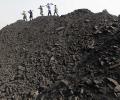
'The Modi government believes the industrialist, the capitalist, has to pay for the assets of the government which belong to the people of India.'

Maharashtra Finance Minister Sudhir Mungantiwar speaks to Prasanna Zore/Rediff.com.
 © 2026 Rediff.com - Advertise with us - Disclaimer - Privacy Policy - Sitemap - Feedback - About us - Terms of use - Grievances